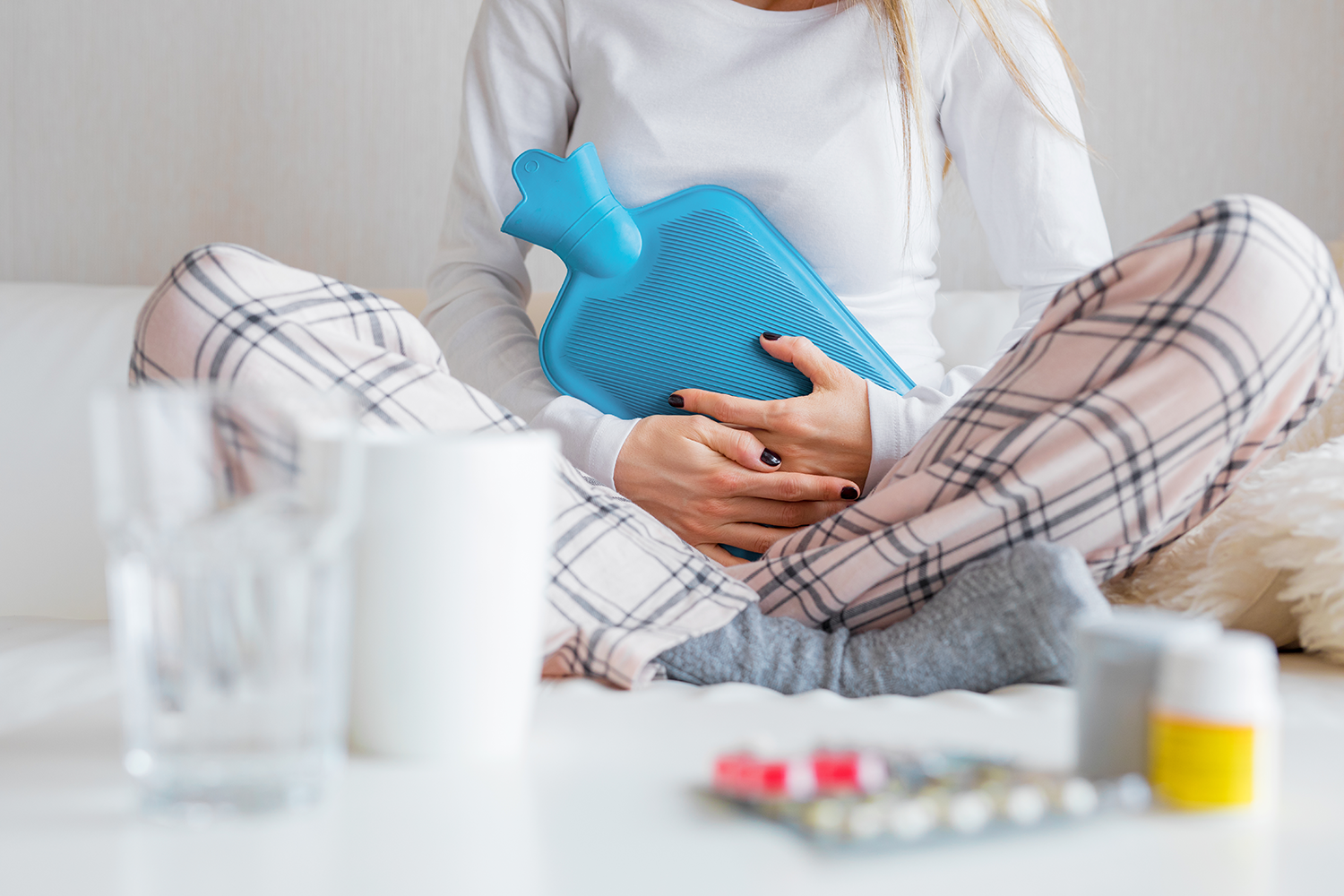

Menstrual Pain Management Strategies
Teens don't always know that there are options to help with their period discomfort. There are several options that can be tried to help manage menstrual pain. Some of these are medication and can be recommended or prescribed by a physician. It is important to speak to a physician before starting any medication.
Pharmacological Options

Learn more about the biopsychosocial contributions to menstrual pain
Pharmacological approaches refer to prescription medications that can be used to manage pain. There is the most research evidence support medication as a treatment for menstrual pain. Youth should speak to their physician if they are interested in exploring pharmacological pain management options for their menstrual pain. Some potential options include:
- Non-steroidal Anti-inflammatory Drugs (NSAIDS): These are often the first options that will be recommended. Most effective when started 1‐2 days before menses (if cycles are predictable) and continued for the first 2‐3 days of bleeding. Common types of NSAIDs include ibuprofen and naproxen. NSAIDs can be combined with acetaminophen to decrease pain.
- Acetaminophen: Acetaminophen is a pain medication that works differently from NSAIDs. It can be a helpful option for those who experience gastrointestinal issues as a result of NSAIDs. A common type of acetaminophen is Tylenol.
- Hormonal Contraceptives: These are commonly prescribed and can be very effective. They can both reduce the intensity of pain and suppress menstruation so that youth have fewer periods. There are several different types of hormonal contraceptive (pill, patch, vaginal ring, implant, intrauterine device) and it is best to talk to a physician to determine the right option.
Importantly, individuals who start taking a pharmacological option and who do not experience relief or have side effects, should follow up with a physician.
Learn more about the biopsychosocial contributions to menstrual pain
How can I feel better?
There are many ways to relieve menstrual pain, including gentle exercise, heat therapy, and stress management techniques. Visit our strategy sections (Pharmacological and Non-pharmacological) for expert-backed strategies and personalized approaches to help you feel better.